
Pre-release gameplay guide
STRANGER THAN HEAVEN Gameplay: 7 Confirmed Systems
STRANGER THAN HEAVEN gameplay combines close-quarters brawling with independently controlled left and right attacks, grapples, counters, improvised weapons, and a separate showman production loop. This guide separates what SEGA and the official stores have confirmed from preview impressions and details that remain unknown before the January 15, 2027 release.
Quick answer: a deliberate brawler plus showman management
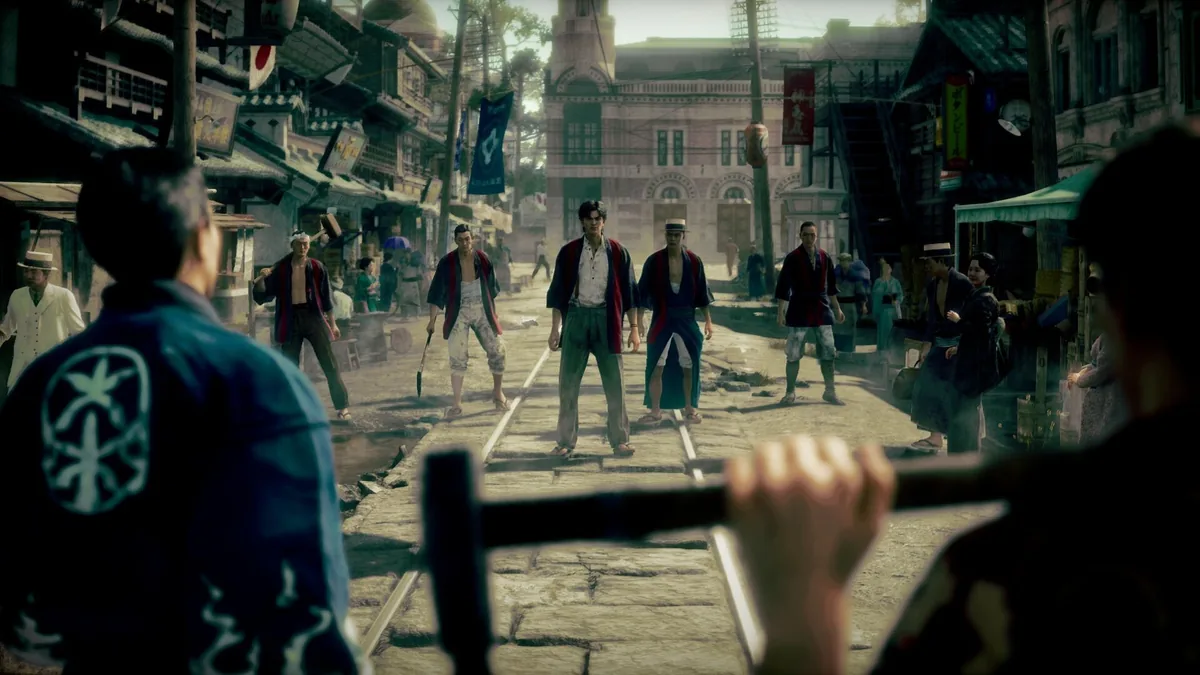
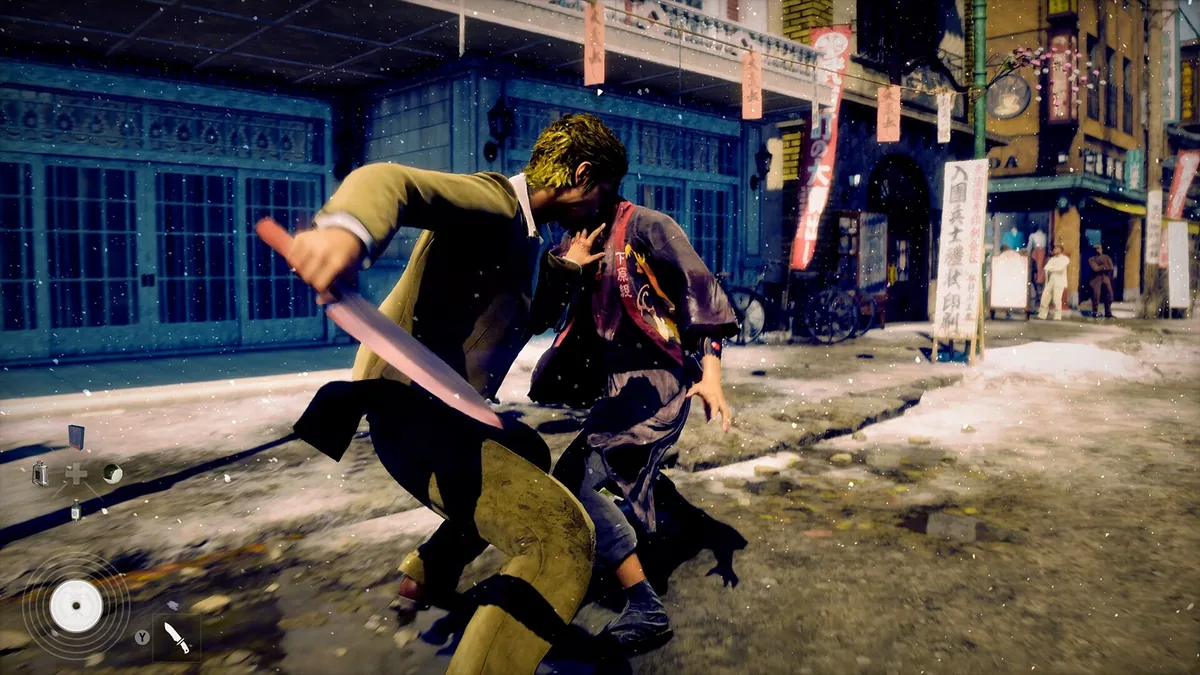
The confirmed combat is real-time action, not turn-based role-playing. Official copy says players control Makoto Daito's left and right sides separately, mix quick jabs with charged attacks, tackle and pin opponents, use blocks and counters, and pick up weapons such as knives, hammers, and katanas. The footage also shows group encounters, contextual movement, and a heavier pace than the most arcade-like Like a Dragon battles. Those are observable features, but button layouts, skill trees, frame data, difficulty modes, and upgrade costs have not been published.
Combat is only half the current pitch. Makoto also builds a career as a showman: gathering street rumors, finding performers, recording sounds, creating music, assembling setlists, arranging a band, casting talent, and managing production details. That sounds like a connected progression loop rather than a single minigame, although official sources have not explained failure states, rewards, schedules, budgets, or how often the system interrupts the main story. The safest expectation is a story-led action adventure with two substantial activity pillars, not an endless sandbox or a management simulator.
- Combat format
- Real-time street fighting with separate left/right actions, charged attacks, grapples, blocks, and counters.
- Weapons
- Official descriptions name knives, hammers, and katanas; availability, durability, and upgrades remain unconfirmed.
- Showman loop
- Rumors, scouting, sound recording, music creation, setlists, band arrangement, casting, and stage production.
- Still unknown
- Game length, open-world structure, difficulty modes, skill trees, minigame list, and post-game content.
5 gameplay systems: confirmed facts vs open questions
Pre-release coverage often turns a few seconds of footage into broad promises. This matrix keeps the useful boundary visible: the middle column reflects official wording or clearly shown actions, while the final column lists details that need a manual, extended preview, demo, or launch build.
| System | What is confirmed | What is not confirmed |
|---|---|---|
| Left/right striking | Each side can be controlled independently, with jabs and charged attacks available. | Exact controls, stance depth, combo routes, cancels, stamina, and accessibility options. |
| Tackles and pins | Makoto can tackle enemies and pin them during close-range fights. | Environmental follow-ups, escape rules, boss immunity, crowd-control balance, and damage scaling. |
| Blocks and counters | Official descriptions explicitly include defensive blocks and counterattacks. | Parry timing, guard breaks, invulnerability windows, difficulty modifiers, and counter variety. |
| Street weapons | Knives, hammers, and katanas are named, and official screenshots show weapon-led confrontations. | Inventory limits, durability, crafting, upgrades, disarming, ownership, and legal or faction consequences. |
| Showman production | Players gather leads and sounds, recruit performers, build music, arrange bands, cast shows, and manage production. | Economy, ratings, failure conditions, repeatability, story gating, and whether choices change later eras. |
How STRANGER THAN HEAVEN combat appears to work
Independent left and right control is the most distinctive confirmed idea. It suggests that positioning and attack selection may matter more than repeatedly pressing one combo button: a quick jab can test space, a charged strike can commit to damage, and a tackle can change the fight from standing exchanges to control on the ground. That interpretation is consistent with the official words and footage, but it is still an interpretation. Until RGG Studio publishes a control diagram, do not assume the system copies boxing games, uses one trigger per hand, or supports unrestricted limb targeting.
Weapons widen the tactical questions. A knife, hammer, and katana imply different reach, speed, and threat, while group screenshots suggest Makoto must read several opponents rather than focus only on duels. Official material also emphasizes extreme violence, so finishers or contextual impacts may be important. What is not yet safe to claim is equally important: no reliable weapon tier list, best build, upgrade path, damage table, or boss strategy exists before verified values are available. Any page presenting precise rankings now would be speculation dressed as a guide.
Jabs, charged attacks, tackles, and pins
Think of these as four confirmed action families, not a complete moveset. Jabs provide the quick option; charged attacks trade time for force; tackles close distance; pins establish control after contact. The useful launch-day questions will be how these actions branch, whether direction changes the result, how enemies interrupt them, and which options remain safe in a crowd. This page will update those mechanics only after repeatable evidence exists.
Blocks and counters should define the skill ceiling
The presence of both blocking and countering implies at least two defensive decisions: absorb or redirect pressure, then punish a readable attack. Preview footage alone cannot establish timing windows or responsiveness. One GamesRadar hands-on described the combat as visually strong but somewhat static, while official marketing stresses intuitive, extreme violence. Both statements can coexist: presentation may be convincing while movement, reactions, or encounter flow still need tuning. The launch build, not a marketing clip or one demo session, should settle that question.
Official media
Watch the gameplay footage with a verification checklist
Use the official Steam footage to verify animation, encounter scale, historical environments, weapons, and performance scenes. Do not use a trailer to infer exact game length, open-world freedom, skill-tree depth, or final performance. The surrounding text records what can be checked frame by frame so the video adds evidence instead of replacing the guide.
The showman system is a second gameplay loop, not decoration
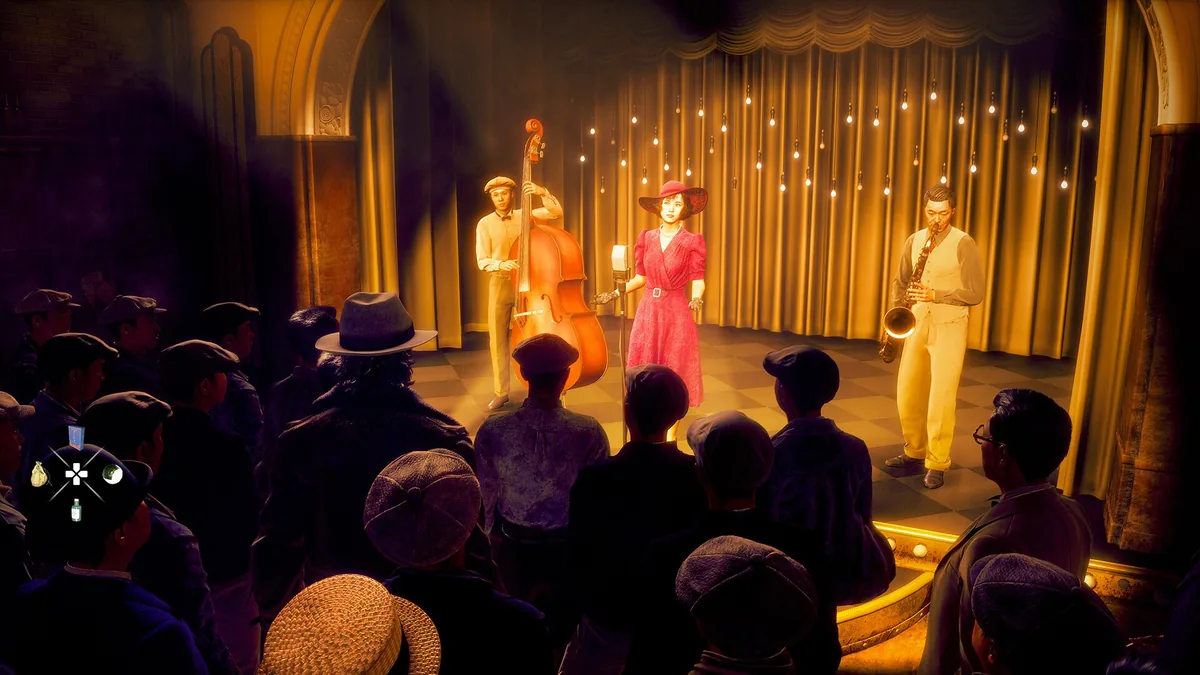
Makoto's showman life appears unusually broad for a side activity. Official descriptions connect information gathering, talent discovery, field recording, music creation, setlist planning, band arrangement, casting, and production management. The sequence matters because it suggests inputs gathered in the city become creative resources, which then become a staged performance. If those links survive into the final game, exploration and social observation could feed a long-term progression system rather than unlock isolated rhythm events.
The official screenshot shows a live stage and audience, but it does not expose the menus or rules behind the scene. There is no verified budget formula, performer tier list, optimal setlist, approval rating, or guaranteed branching outcome. Players should expect a meaningful system because the publisher gives it prominent feature space, while remaining cautious about calling it a full business simulator. The most useful future guides will document where rumors and sounds are found, how performers differ, what production choices cost, and which rewards carry into combat or story progression.
- Listen for street rumors that may point to opportunities, people, or locations.
- Scout performers and record sounds in the cities Makoto visits across five eras.
- Turn collected material into music and organize it into a setlist.
- Arrange the band and cast performers for a specific production.
- Manage presentation details and evaluate the resulting show and rewards once final rules are known.
What previews add, and where they should not overrule official facts
Current editorial coverage falls into three groups. Broad guides from PC Gamer and GamesRadar combine release date, cast, story, combat, and activities, which is useful for orientation but leaves mechanical boundaries thin. Trailer-news pages confirm that new footage exists, yet usually summarize rather than test it. A hands-on preview adds valuable feel-based evidence, including concern that combat movement appeared static, but one controlled demo cannot prove the full game's difficulty curve, enemy variety, polish, or late-game builds.
A practical reading order is therefore: use Steam, Xbox, SEGA, and RGG material to establish features; use hands-on previews to identify questions about responsiveness and pacing; wait for a public demo, manual, technical breakdown, or retail build before publishing numeric advice. This prevents a common SEO failure where an early article turns temporary impressions into permanent facts and then ranks with outdated claims after launch.
Confirmed by official sources
Real-time action, separate left/right control, jabs, charged attacks, tackles, pins, blocks, counters, named weapon types, five eras and cities, and a multi-step showman activity loop.
Useful preview evidence
Hands-on writers can describe weight, pacing, visual feedback, demo structure, and apparent responsiveness. These observations should be attributed and treated as build-specific rather than universal.
Wait for verification
Total playtime, map openness, difficulty settings, skill trees, exact controls, weapon stats, minigame count, performance economy, achievement requirements, and post-game modes.
Is the gameplay like Yakuza or Like a Dragon?
The strongest similarities are the developer, dramatic urban brawls, weapons, dense city activity, serious crime storytelling, and an eccentric secondary system. Those are valid reasons for Yakuza and Like a Dragon players to pay attention. The important distinction is mechanical: official STRANGER THAN HEAVEN copy highlights independent left/right actions and a showman production chain, while recent numbered Like a Dragon entries use turn-based party combat and older Yakuza games use their own real-time style systems.
Do not reduce the new game to 'Yakuza in 1915.' It spans 1915 to 1965, follows Makoto Daito, and may build different combat rhythms around tackles, pins, counters, and production work. Our separate series-relationship guide explains the canon question; this page stays focused on what players do. That separation prevents the same high-volume Yakuza query from competing across two pages with identical answers.
FAQ
STRANGER THAN HEAVEN gameplay FAQ
How do STRANGER THAN HEAVEN gameplay controls work?
Official descriptions say Makoto's left and right sides can be controlled independently and name jabs, charged attacks, tackles, pins, blocks, counters, and weapons. A final button map, combo list, accessibility layout, and platform-specific controls have not been published, so precise control diagrams should wait.
How long will STRANGER THAN HEAVEN be gameplay-wise?
No verified main-story or completionist playtime is available. The five-era structure and showman system suggest substantial scope, but they do not prove a specific hour count. Treat estimates before reviews or launch telemetry as speculation.
Is STRANGER THAN HEAVEN turn-based?
No. Current official footage and descriptions present real-time action combat. That separates it from the turn-based party battles in recent numbered Like a Dragon games, although the final game may still include progression menus and non-combat management systems.
What is the showman gameplay system?
It is a connected set of activities in which Makoto gathers rumors, scouts performers, records sounds, creates music, builds setlists, arranges a band, casts talent, and manages production. Rewards, budgets, rankings, failure states, and long-term consequences are not yet fully explained.
Is there a STRANGER THAN HEAVEN demo?
Official store pages currently promote pre-purchase and media rather than a broadly available public demo. Preview events have included hands-on access, but that is not the same as a downloadable consumer demo. Check the official Steam, PlayStation, Xbox, SEGA, or RGG pages before downloading anything presented as official.
Sources
Sources and update policy
Official store descriptions and media establish the confirmed systems. PC Gamer provides a broad topic map, while the GamesRadar hands-on supplies an attributed pre-release impression. This page will change claims about controls, length, builds, weapons, and showman rewards only when a public demo, official documentation, or the retail game provides repeatable evidence.