
Pre-release feature check
Is STRANGER THAN HEAVEN Open World? Facts vs. Assumptions
Short answer: SEGA has not confirmed a freely explorable open world. Steam currently lists Open World among its popular user-defined tags, but a community tag is not a developer feature announcement. Official descriptions confirm an action-adventure saga across five eras and cities; they do not yet explain how freely players can move between places.
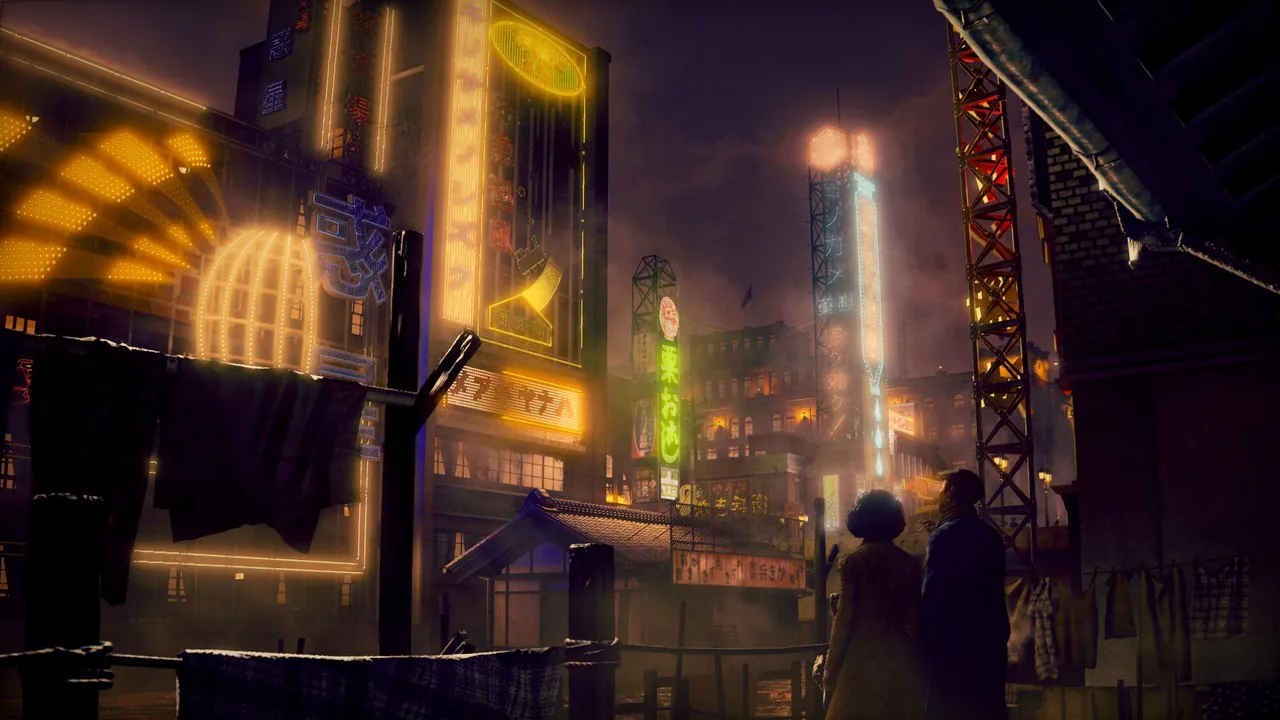
The answer: open-world structure is not officially confirmed
As of September 24, 2026, the safest answer is that STRANGER THAN HEAVEN has not been officially described as an open-world game. SEGA calls it a story spanning five eras and five cities. Xbox and Steam describe an action-adventure set across those eras and cities. None of those descriptions confirms one continuous map, unrestricted exploration, or seamless travel between the cities.
There is a reason the question appears: Steam's product page currently includes Open World in its popular user-defined tags. Steam identifies that area as tags chosen by users, so it is evidence of a community classification, not a promise from RGG Studio or SEGA. The distinction matters: the game may include explorable streets or hubs without being a full open-world sandbox, and the available pre-release material does not settle that design question.
- Official open-world confirmation
- Not found in the checked publisher and platform descriptions
- Confirmed setting
- Five eras, five cities, and a story-led action-adventure premise
- Still unknown
- Map size, free-roam rules, city connections, fast travel, and chapter locks
What SEGA, Xbox, PlayStation, and Steam actually confirm
SEGA presents a fifty-year story told through five eras and five cities. The official Xbox listing describes an action-adventure and names the five-era, five-city structure; the PlayStation page places the saga between 1915 and 1965. Steam's store description also frames it as an action-adventure story. These are positive facts about setting, genre, and chronology, but none defines the size or connectivity of the playable world.
Official gameplay media shows streets, crowds, fights, and performance spaces. Those scenes demonstrate that urban locations are part of the presentation. Edited footage does not show whether the player can leave a mission route, revisit districts, cross between cities without a chapter transition, or explore every visible street. Treat those as unanswered questions until a hands-on map, manual, or released build demonstrates them.
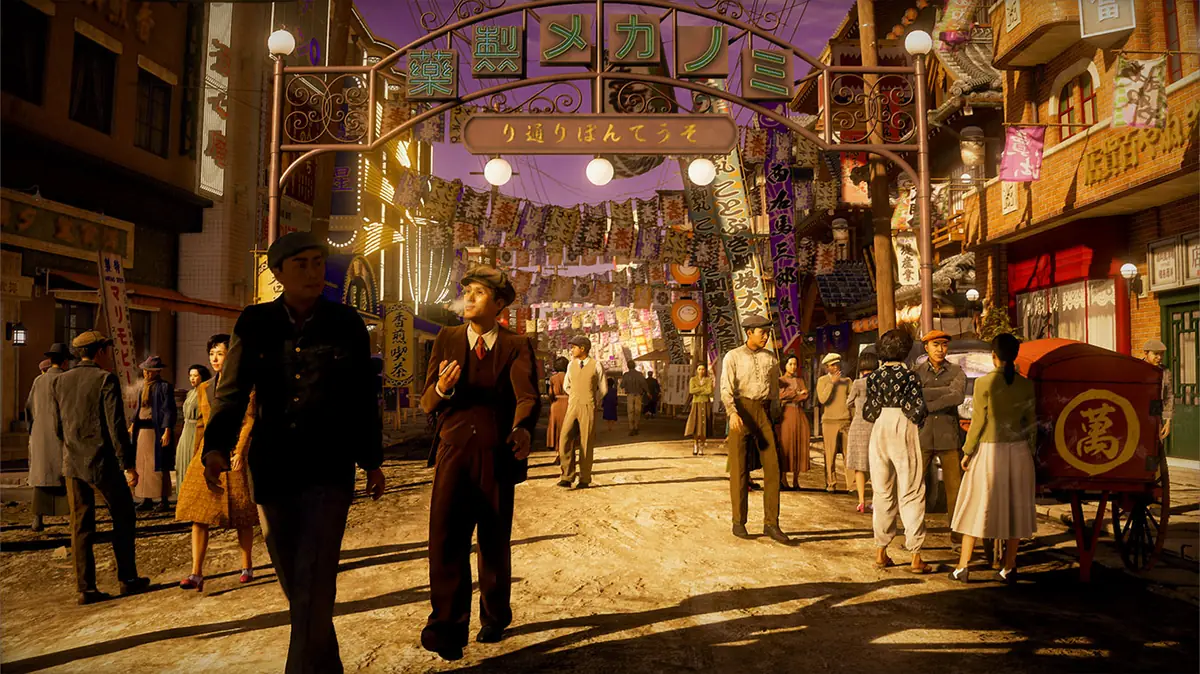
What players mean by an open-world game
Open world usually describes a structure where players can choose routes and activities across a broad connected space outside tightly ordered mission paths. It is not a precise technical standard, and games use the label differently. A large street hub, several city districts, and a seamless multi-city map are three very different designs.
To classify STRANGER THAN HEAVEN fairly, look for evidence about player freedom rather than scenery alone. A cinematic view over a district can make a linear chapter look expansive; a mission-based action game can still have explorable hubs. The useful question is not whether the game contains streets, but how much control players have over where they go and what they do between story objectives.
A Steam tag is community labeling
Steam's page labels this section as popular user-defined tags. Open World there reports how users categorize the product; it is not equivalent to a confirmed feature list from the developer.
Several cities do not prove one open map
A story can visit five cities through separate chapters, fixed missions, or small hubs. The announced city count describes the narrative itinerary, not the travel system between locations.
A detailed street does not prove free roaming
Screenshots show art direction and visible space. Only sustained player-controlled footage or direct play can show boundaries, optional routes, and whether those spaces remain accessible outside a scene.
Confirmed setting
Five announced eras and cities: what the list proves
The official premise gives the story a long chronology and multiple locations. The table separates that confirmed itinerary from map details that have not been published.
SEGA's official site also describes an opening in San Francisco in 1915, then separately lists five Japanese cities. The table follows that five-city list. The source does not say whether San Francisco is playable or a separate introduction, so it does not confirm a sixth explorable map.
| Announced city | Story era | What this confirms | What this does not confirm |
|---|---|---|---|
| Kokura, Fukuoka | 1915 | One part of the five-era story is set in this period and city. | A connected city map, open side activities, or free travel. |
| Kure, Hiroshima | 1929 | The story moves to another announced era and location. | Whether this chapter shares space with another era or city. |
| Minami, Osaka | 1943 | The chronology covers another distinct historical setting. | District size, optional routes, and return visits. |
| Atami, Shizuoka | 1951 | A later era adds another city to the announced journey. | Seamless travel, fast travel, or a world map connecting chapters. |
| Shinjuku, Tokyo | 1965 | The announced journey reaches its final listed era and city. | Post-story access, free-roam content, or whether the city stays open. |
How to verify the world structure before you buy
Do not use the Open World tag alone as a purchase promise. Before release, prioritize a source that demonstrates continuous player control: an official gameplay walkthrough, an uncut preview, a map explanation, or a hands-on report that describes where the player can go outside missions. A trailer assembled from separate scenes cannot answer those questions by itself.
At launch, compare the final game with the questions below. Record what the player can actually do, not just how large a location looks in a screenshot. If a review describes a hub or chapter-based structure, that can still be useful exploration, but it should not be summarized as a seamless open world without supporting evidence.
A practical evidence checklist
- Check whether an official feature list explicitly uses open-world, sandbox, or free-roam wording.
- Watch a continuous gameplay segment and note where control starts, stops, or returns after a scene.
- Look for a map screen and whether it shows one district, several districts, or separate chapter locations.
- Check whether optional activities can be started outside the main mission route and revisited later.
- Separate first-party statements from store tags and preview impressions, then date the evidence.
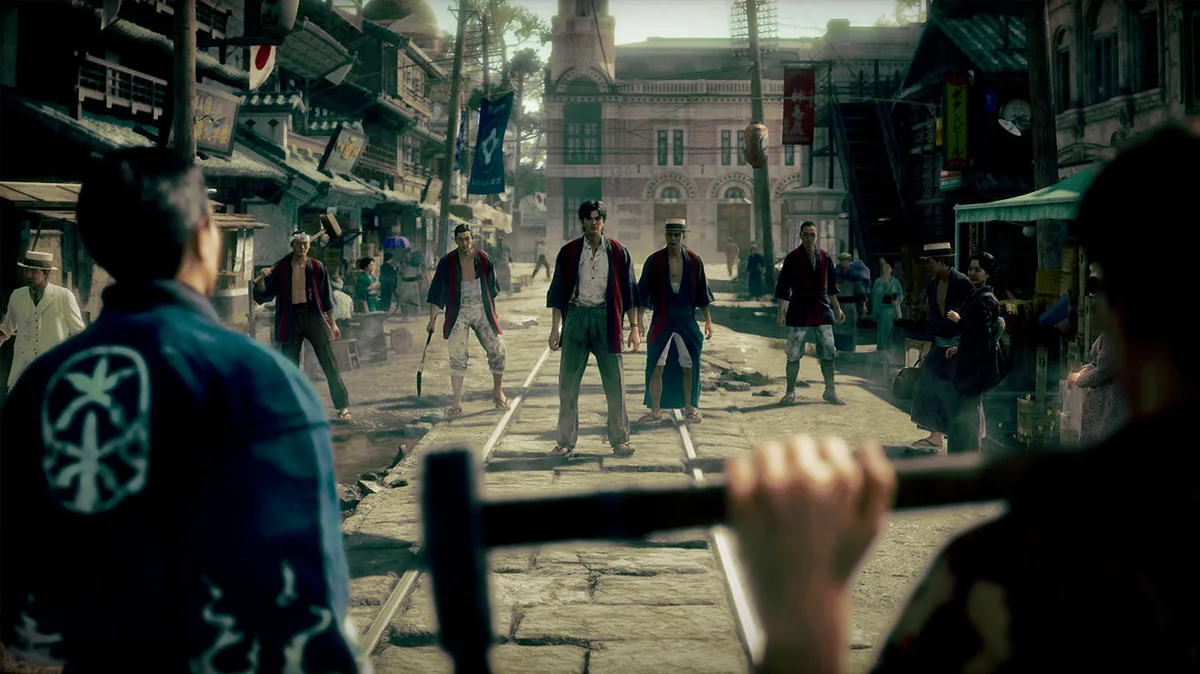
Confirmed facts, reasonable interpretation, and open questions
This is a pre-release status check, not a review of a finished game. Facts below come from the current official product pages. The interpretation explains what those facts do not establish; it is not a hidden claim about the final design.
The game is scheduled for January 15, 2027 on Xbox according to the official Xbox listing checked on September 24, 2026. Steam may display January 14 in some regions because store dates follow local release timing. The release is still in the future on this check date, so the map question remains subject to change as new footage or documentation appears.
Confirmed by first-party descriptions
An action-adventure premise, a fifty-year story, five eras and cities, and current official store pages for the announced platforms.
Supported interpretation
The five-city itinerary may use separate chapters or hubs. That is plausible, but the sources checked do not specify the final level or map structure.
Not yet verified
A seamless open world, unrestricted free roam, a single connected map, map scale, fast travel, multiplayer, and post-story exploration.
FAQ
STRANGER THAN HEAVEN open-world FAQ
Has SEGA confirmed that STRANGER THAN HEAVEN is open world?
The SEGA, Xbox, Steam, and PlayStation descriptions checked on September 24, 2026 do not confirm a freely explorable open-world structure. Steam lists Open World among popular user-defined tags, which is a community classification rather than a developer statement.
Can players freely roam the cities in STRANGER THAN HEAVEN?
That has not been confirmed in the official descriptions reviewed. City scenes and multiple story locations do not show whether players can leave mission routes or revisit districts.
Do five cities mean there is one large connected map?
No. The five cities describe the story's locations. They could be represented through separate chapters, hubs, or a connected map; current first-party information does not specify which structure the game uses.
Does STRANGER THAN HEAVEN have multiplayer?
The Steam page lists single-player as a feature. The official sources checked do not announce online or cooperative multiplayer.
Has the STRANGER THAN HEAVEN map or map size been revealed?
No map layout or map-size specification was found on the official pages checked. A clear map view or continuous exploration segment would be stronger evidence than a cropped street screenshot or a user-defined store tag.
Sources
Sources and update date
Publisher and platform pages were checked on September 24, 2026. Store copy and user-defined tags can change, so this page separates the current source wording from assumptions about the final game.
- Xbox official STRANGER THAN HEAVEN page
- SEGA official STRANGER THAN HEAVEN site
- PlayStation official STRANGER THAN HEAVEN page
- Steam STRANGER THAN HEAVEN page
Last checked September 24, 2026. This is a pre-release guide; revisit the official pages and final gameplay before treating map or exploration details as confirmed.